
Compare Values in New Kent County Property Records
A New Kent County property value lookup usually starts in one of two places. The first is the Commissioner of the Revenue's Vision database. The second is the county's Excel property file. Assessments in New Kent are effective January 1, 2026. The county refreshes the data weekly. Alongside each parcel you can find sale dates and prices, square footage, acreage, building details, zoning, and district. Search New Kent County property records by address to see all of it at once. Keep one distinction in mind. A recorded sale price marks a single transfer. The assessed value is the county's number for its tax system. Neither is an appraisal or a prediction of what a buyer will pay.
| Value | What It Is | Where |
|---|---|---|
| Assessed value | Parcel-level assessment published through the Commissioner’s data | Vision and county Excel/land-book links |
| Fair-market estimate | Countywide reassessment estimate; not a parcel appraisal | New Kent’s 2026 reassessment report |
| Last sale price | Reported consideration for a transfer; transaction context matters | County transfer data and recorded deed |
| Building and land characteristics | Construction, square footage, acreage, zoning, and district | Commissioner’s property-data inventory |
New Kent’s countywide report put fair-market value for taxable and exempt real estate at $7,684,716,390. It also set a 2026 equalized rate of $0.54 per $100 of assessed value. Those numbers sketch the county’s reassessment picture. They say nothing about what a specific house would fetch on the market today, and they do not stand in for an individual tax bill. For a firm figure on one property, an appraisal based on an inspection and a property-specific assignment remains the right tool.
Find a New Kent Assessment by Parcel
Start by finding the property in Vision with an address or an owner clue. Save the GPIN or Tax Map Parcel Number for later reference. A value can look odd at first glance. Before concluding anything, check the effective date. Then compare the property characteristics in the county's data. Vision confirms weekly updates and the January 1, 2026 effective reassessment. Individual field labels on each record vary, so read the parcel screen closely.
- Search the parcel in the New Kent Vision database and record the update date and parcel identifiers.
- Read the assessment and the county-described construction, square-footage, acreage, zoning, and district information.
- Use the county’s Vision Sales Search or transfer file for a recorded-sale clue; confirm the deed and sale context.
- For the 2026 reassessment, check whether a candidate comparison is within the stated one-year period and marked qualified “Q.”
- Assessed value
- The value assigned to a parcel in the county assessment record.
- Market value
- A price estimate under market conditions; it is not identical to an assessed figure.
- Sale or consideration price
- The amount associated with a completed transfer, subject to the transaction’s context.
- Equalized rate
- A countywide comparison rate reported with reassessment information, not a parcel’s total bill.
What a New Kent County Assessment Does Not Tell You
A New Kent assessment is not an offer to buy. It isn't a guaranteed sale price. It also isn't an inspection, or an appraisal prepared for a particular transaction. Recorded sales carry their own caveats. A deed can reflect an estate transfer or a gift rather than an ordinary market sale. Before using any sale as a comparison, read the property characteristics. Then confirm the deed record itself. Tax bills, exemptions, and formal value challenges run through a separate county process. A value lookup is only part of the answer.
Value vs. price. The county’s assessment serves an assessment purpose and is not what a property will necessarily sell for. For a transaction or lending decision, obtain an appraisal prepared for that purpose.
New Kent’s 2026 Reassessment in Countywide Numbers
The numbers behind New Kent's 2026 reassessment are large. The report estimates $7,684,716,390 in fair-market value across all taxable and exempt real estate. It also reports an equalized rate of $0.54 per $100 of assessed value. Together they describe the scale of the reassessment and its equalization context. They are not the value of one parcel. They are not an individual amount due. And they are not a rate to multiply against a single property without checking the county's tax materials first. The reassessment took effect January 1, 2026, and New Kent reassesses every two years. Vision property data is published weekly. The county's land-book copies and parcel spreadsheet are snapshots from their download dates. Keep those dates straight. Effective date, download date, transfer date, and tax-billing year each describe a different event. For valuation and review materials, open the county's 2026 reassessment page.
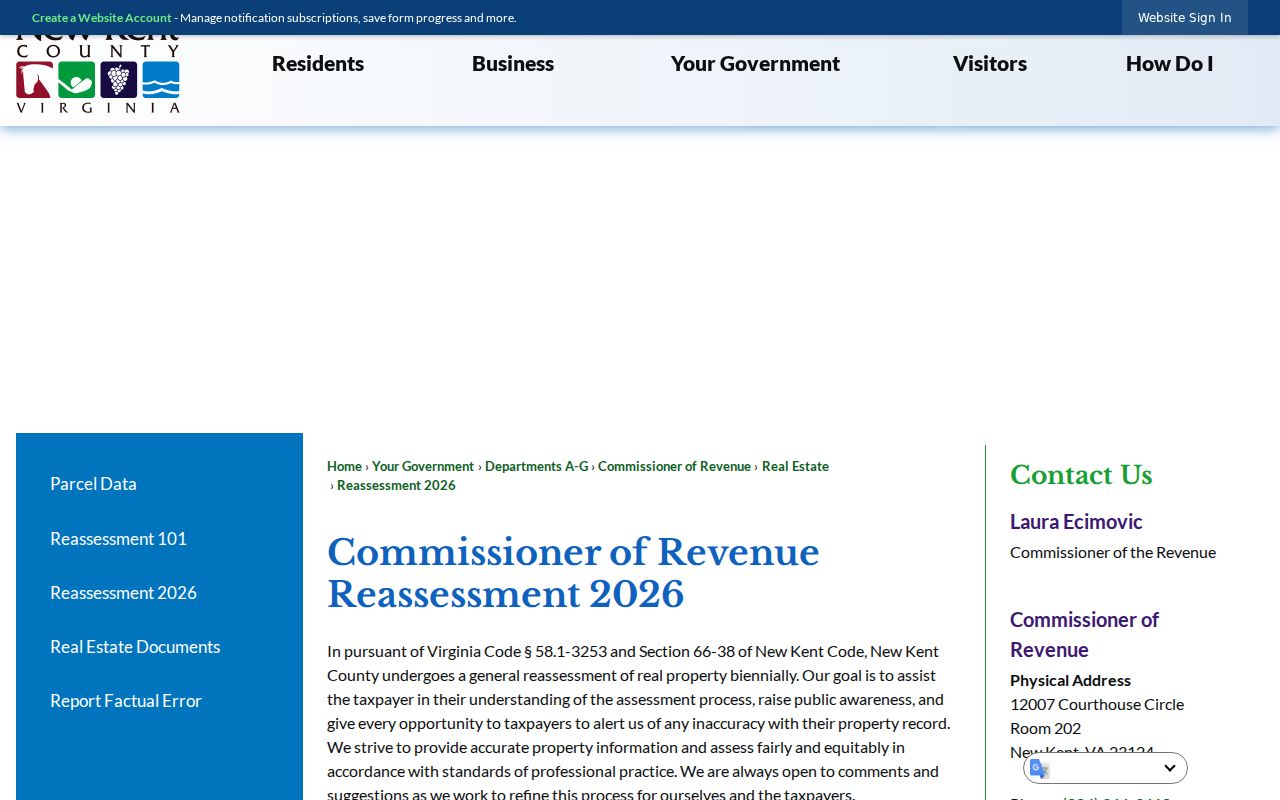
The county page sets the countywide context; for a single property's value, compare the parcel-level record in Vision.
Use the New Kent Assessment Effective Date
Everything in the current reassessment hangs on the January 1, 2026 effective date. Vision lists that effective year and is updated weekly. Note both dates when you research a value. One is the effective date. The other is the day you pulled the data. If a building was altered, a parcel was split, or a transfer happened near the assessment period, compare the Commissioner's published characteristics against the planning or deed record. New Kent's data includes construction details, square footage, acreage, zoning, and district. Those fields help you judge whether two properties are truly comparable. Individual parcel cards and separate land or improvement valuation fields aren't always visible. Ask the Commissioner about a specific component, exemption, or adjustment you can't see. The county's Vision assessment page is the current portal route.
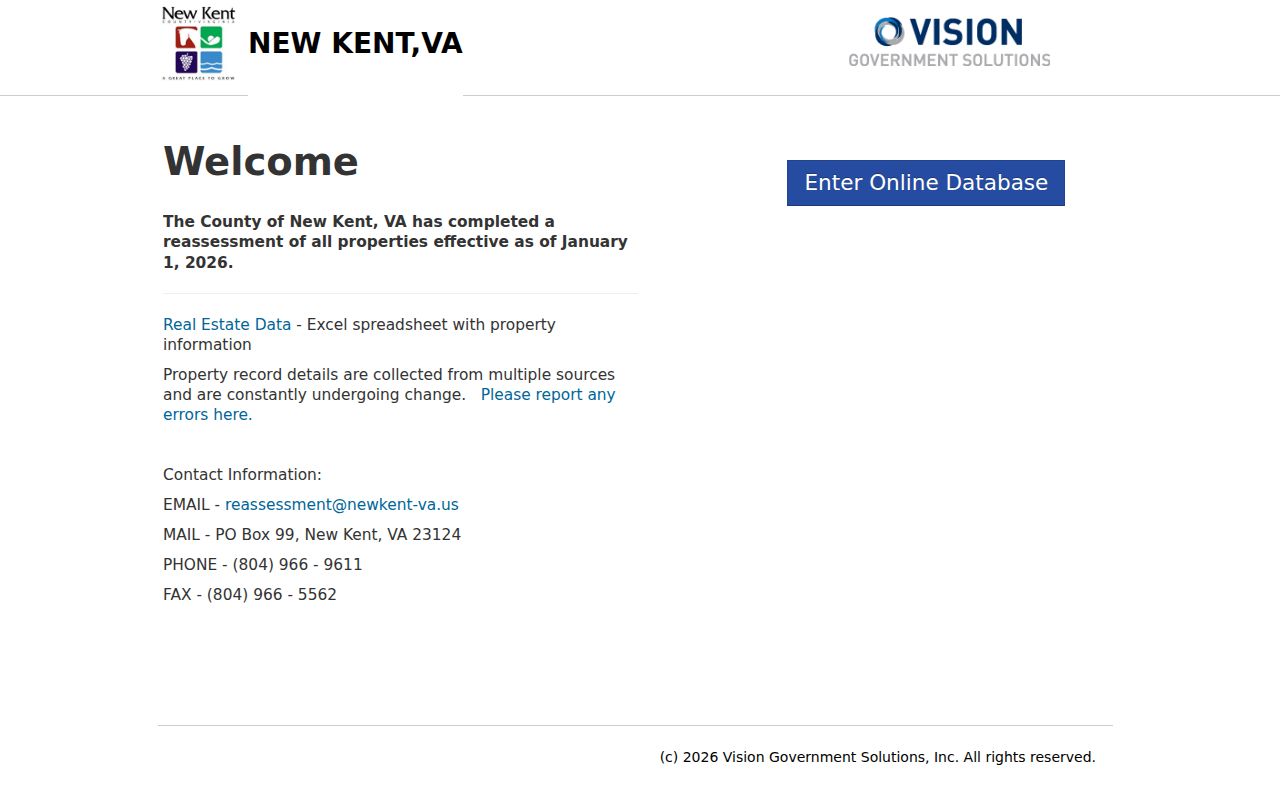
Use the portal’s effective-date notice to distinguish current data from an older downloaded value.
Choose Qualified New Kent Sales, Not Listings
Not every sale counts. New Kent's appeal guide says comparables for the 2026 assessment must fall within one year before the effective date. They must also carry a "Q" for qualified in the county database. A "U" sale is unqualified for that model. Its price may still show up in a transfer file. A listing that never closed is not sale evidence either. These distinctions matter because sale price and assessed value answer different questions. When weighing a candidate sale, record its date, price, acreage, building size, model, style, and legal description. The county Sales Search lets you filter by date range and price range. You can also filter by land area in acres or square feet, building area, model, and property style. Confirm each transfer through the recorded deed. Keep the qualified status from the county's data. Neighborhood similarity alone is never enough. Use the Vision Sales Search to reach those filters.
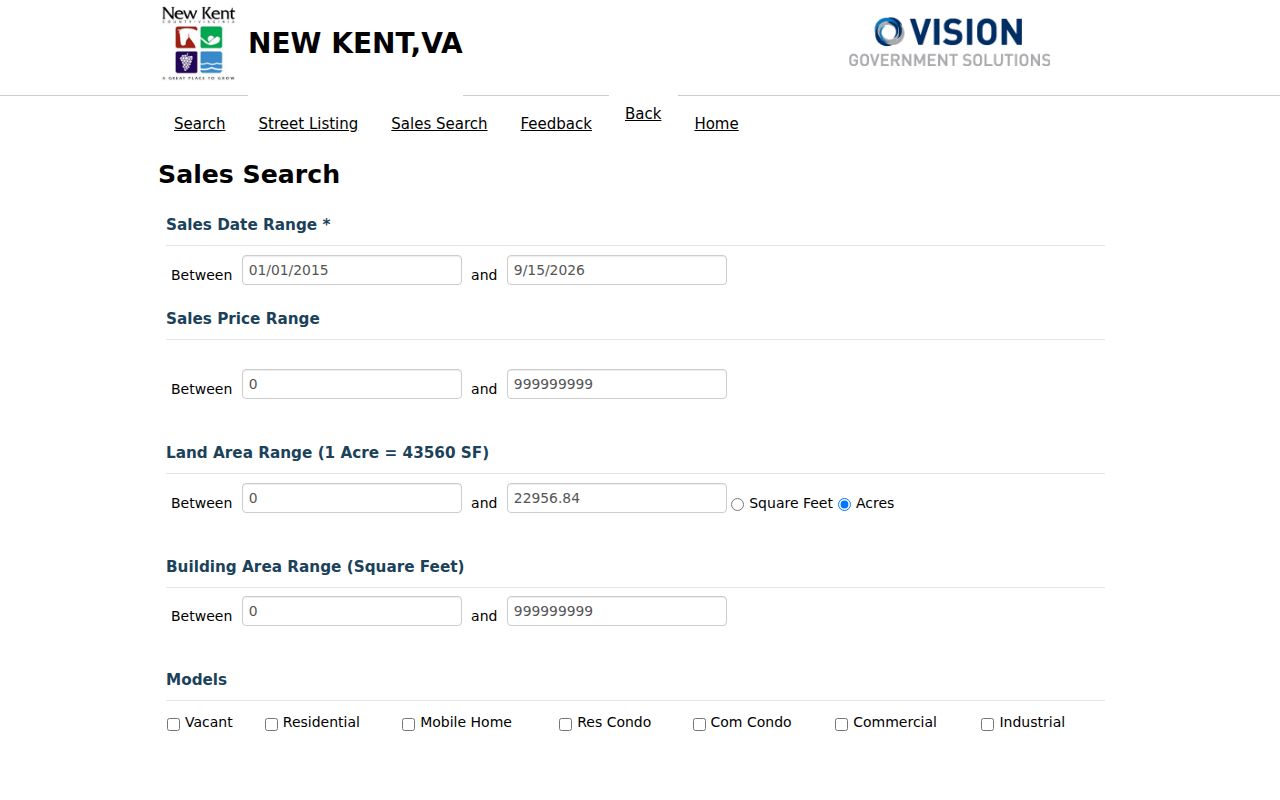
Filters narrow the candidates. The qualified or unqualified marker, together with the actual recorded deed, decides how a sale should be treated.
Check New Kent Building and Land Characteristics
A value comparison only holds up when the parcel description behind it is sound. New Kent's inventory goes beyond ownership and assessment. It covers construction details, square footage, acreage, zoning, and district. Sale and owner data appear as well. Check these characteristics before leaning on a similar sale. Two nearby parcels can carry very different assessed values. The difference may come down to one larger building or one lot with more acreage.
Need a detail the spreadsheet or Vision display lacks? Call the Commissioner at (804) 966-9611. The online card does not show separate land and improvement value fields. It also lacks a sketch and a full property history for every parcel. Do not assume another county's portal layout fills those gaps. New Kent's Excel data supports broad comparisons. The official signed and notarized land book stays with the Circuit Court. Use the county Parcel Data page to reach its current files and land-book links.
Separate New Kent Sale Price from Assessed Value
A transfer price belongs to one event. An assessed value is the Commissioner's parcel valuation for the assessment record. Not every transfer reflects the open market. A gift or estate transaction carries a price that says little about what a buyer would pay. New Kent's file reports the sale date and price. The Circuit Court Clerk's deed records the legal instrument and description. Read both before treating any sale as a value indicator.
The county posts weekly Vision data and a current Excel file. It labels the online land-book copies unofficial, though. A spreadsheet makes comparison easier. It cannot replace the recorded deed or the official land book. The Clerk is the office for the legal chain and recording details. For what a sale price means in a value review, follow the county's qualified-sale instructions.
Send New Kent Tax and Appeal Questions to the Right Office
Value research ends where the assessment's meaning and source end. A bill amount, payment record, exemption, or formal appeal follows a different path. New Kent's Commissioner handles the assessment and posts reassessment materials. The Treasurer holds the account and its payment history. The Board of Equalization runs the appeal process. The 2026 Board deadline was April 30 at 4:00 p.m. and has passed. Confirm later filing dates on the current county pages.
For the bill, the account-number transition, payment, and appeal steps, use the New Kent property tax records guide. That route keeps a value comparison apart from the amount owed. It also separates the procedure for challenging an assessment. The 2026 Board materials remain available at the New Kent Board of Equalization page. Check current dates before relying on them.