
Trace Former New Kent County Property Owners
Start with the newest deed and work in reverse. In that deed, find the grantor. Then hunt for an earlier deed where that same grantor was the grantee. Keep going. Every link must describe the same land. The owner name, road label, or parcel number may shift between deeds. New Kent's trail blends a modern SRA/COVERS index with courthouse land records. It also includes microfilm cataloged by the Library of Virginia. Those historical collections give real year ranges you can check. They are not a vague promise that every older instrument sits online.
| Source | Years It Covers | Where Held | What It Shows |
|---|---|---|---|
| Virginia SRA/COVERS index | New Kent start year not confirmed | Virginia Judicial System; local Clerk controls images | Indexed grantor/grantee instruments where enabled |
| New Kent deed books 1–18 | 1864–1923 | Library of Virginia microfilm; Circuit Court Clerk | Recorded conveyances and legal descriptions |
| Grantor and grantee general indexes | 1864–1912 | Library of Virginia finding aid and clerk records | Two directions for tracing the deed chain |
| O.M. Chandler Plat Book; fiduciary books | Plat 1881–1921; fiduciary 1865–1930 | Library of Virginia microfilm; clerk records | Subdivision, land-description, and estate context |
Reach for the current index when a transfer is recent. Use the microfilm catalog for the documented 1864 to 1923 deed-book span. The Chandler Plat Book and fiduciary volumes add context. Turn to them when a legal description or estate transfer gets murky. Before 1864, the trail thins. New Kent County formed from York County in 1654. Ask the Clerk and the Library of Virginia about earlier holdings. Don't assume the cataloged microfilm is everything.
Walk the New Kent Deed Chain in Reverse
The reverse walk takes one conveyance at a time. Begin with the deed recorded for today's grantee. Identify the grantor. Then search backward for the deed in which that grantor received the parcel. Note the recording reference and compare the full land description before stepping to the earlier link. The grantor and grantee indexes cataloged for 1864 through 1912 exist separately for exactly this purpose, since a chain runs in both directions and a single one-way name list will not carry you back.
- Find the latest deed into the present grantee and write down the recording date and full legal description.
- Take the grantor named in that instrument and search the earlier grantee index for the same tract.
- Compare acreage, lot, roads, adjoining owners, and any plat reference to rule out a same-name parcel.
- Continue through the 1864–1912 index run, then consult the deed books and earlier holdings available through the Clerk or archives.
- Grantor / grantee
- The transferring party and receiving party named in each deed.
- Chain of title
- The ordered sequence of instruments connecting successive interests in one parcel.
- Legal description
- Lot, acreage, bearings, waterways, roads, or adjoining tracts that identify the land.
How Far Back New Kent Ownership Research Reaches
The Library of Virginia finding aid starts the deed-book microfilm at Book 1, covering 1864 to 1872. It runs through Book 18, covering 1922 to 1923. A separate general grantor and grantee index covers 1864 through 1912. Those are solid checkpoints. The online SRA index publishes no stated cutoff. The 1864 catalog start does not mean earlier county records never existed. New Kent County formed from York County in 1654. So a pre-1864 ownership question may call on the Clerk's older holdings, state archives, or other historical collections.
Lawful use. Use former-owner research for property history, title work, estate research, and purchase diligence. Do not use names or addresses to track, stalk, or harass a living person.
New Kent’s Cataloged Deed Books Cover 1864–1923
The Library of Virginia finding aid lists eighteen New Kent deed books on microfilm. Book 1 covers 1864 to 1872. Book 2 runs to 1879, and Book 3 to 1884. Book 4 reaches 1889; Book 5 reaches 1893. Book 6 runs to 1898. Book 7 covers to 1902, and Book 8 to 1904. The sequence continues through Books 9 to 18. It closes with Book 18, spanning 1922 to 1923. Those catalog years give you a concrete place to continue. Use them once a web index stops reaching an earlier grantor.
Use the deed date and any book reference to find the right catalog entry. Older volumes often describe a tract by acreage, road, waterway, or neighboring owner. They may not use a street address at all. Record the grantor, grantee, legal description, and reference exactly as written. Compare each detail against the adjoining link. A similar name alone does not prove the same person held the same parcel.
Open the Library of Virginia's New Kent catalog to identify the listed volume and microfilm run.
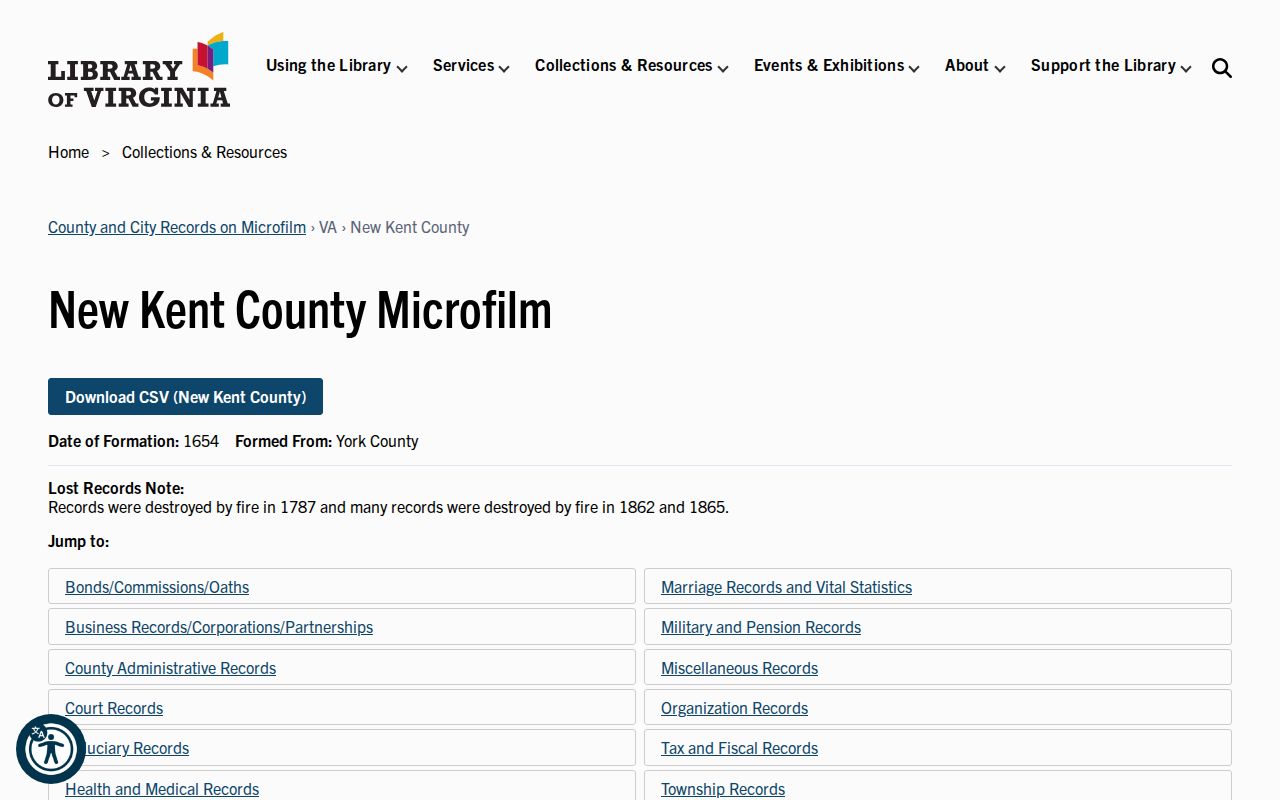
The finding aid names the historic books and turns an online dead end into a concrete archive search.
New Kent’s Grantor and Grantee Indexes Are Separate
The Library of Virginia catalog lists a general grantee index and a general grantor index. Both cover 1864 through 1912. You need both to walk a chain backward. The grantee direction finds a transfer into a prior owner. The grantor direction finds a person conveying land out. Confirm the instrument and description at every step, since one party name may cover unrelated tracts or several people sharing a name.
Log the deed date, parties, book or instrument reference, and property description as you go. When an index points to an older deed book, follow that reference into the volume. Read the entire description, not just the name entry. Beyond the listed general indexes, ask the Circuit Court Clerk and the Library of Virginia which earlier books or separate indexes apply.
Move from New Kent SRA to the Historic Volume
Virginia’s SRA and COVERS systems can open remote index access. This applies to clerk offices that take part. New Kent publishes no stated online cutoff. So treat the index as a starting point rather than a complete deed-record set. Index-only access and image access are separate tiers. Pulling an actual deed image can require the local Clerk’s approval. It can also require a signed subscription agreement and fees set by the office. When an index entry points to an old book, note the reference. Then move to the cataloged film. Do not repeat address searches that will never reach the historic volume.
The statewide SRA information spells out the difference between an index line and a document image. New Kent’s Clerk stays the local authority on availability and copy cost. The office also arranges in-person inspection at 12001 Courthouse Circle. No fee schedule for ordinary or certified deed copies is published. So ask the Clerk for current instructions before ordering.
Read the Virginia SRA land-record access page before planning remote image use.
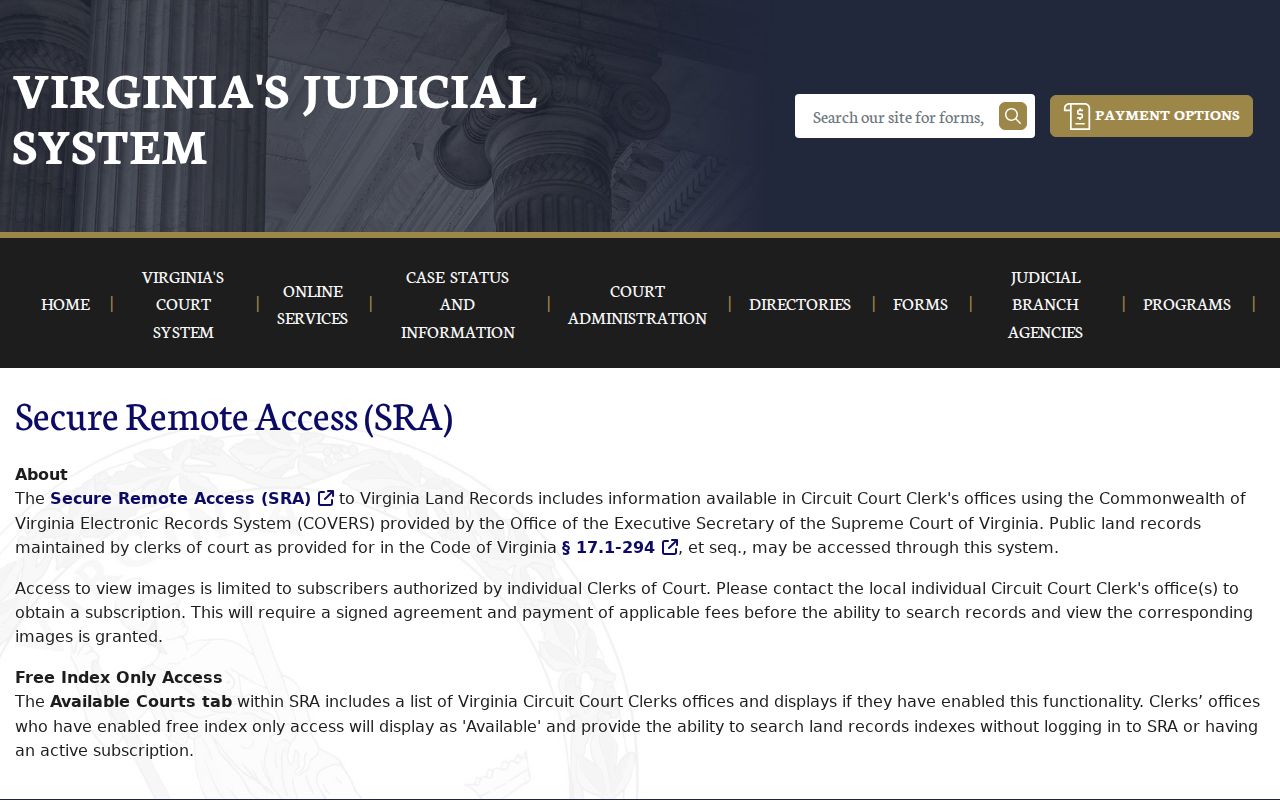
The SRA rules explain why an online index may show a deed while the underlying image stays off limits.
Use a New Kent Plat When Addresses Change
Old property descriptions often outlive a road-name or address change. A deed fixes the land by boundaries, acreage, adjoining owners, or a named lot. It does not use a street number. The Library of Virginia catalog holds O.M. Chandler’s Plat Book covering 1881–1921, complete with an index. It also holds processioners’ reports from 1867 and a processioners’ book from 1880–1881. Those materials can tie an old tract name to a subdivision or lot. A later deed may name that same lot.
Modern planning files supply another link in the chain. New Kent forms ask for both the Tax Map Parcel Number and the GPIN. They record before-and-after lines, bearings, distances, acreage, zoning, surveyor details, and approvals. Once agencies sign off, the final plat can be recorded with the Circuit Court Clerk. Compare the historic plat, the planning file, and the current recorded description. A present street number alone is a weak search term for New Kent parcel history.
Estate Files Can Explain a New Kent Ownership Gap
Some ownership gaps trace to an estate rather than a sale. A will, fiduciary appointment, order of sale, commissioner’s deed, administrator’s deed, or deed from heirs can explain a shift. The next owner of record may differ from the person named in the prior instrument. New Kent’s Circuit Court Clerk holds wills, fiduciary and probate records, and land instruments. The Library of Virginia catalog lists fiduciary books spanning 1865–1930. It also lists a roster of fiduciaries from 1850–1870.
Let the estate file establish who had authority. Let the recorded deed or order connect that authority to the land. Vital records can support a death or relationship question. But current certificates are restricted to qualified applicants and prove nothing about title. A historic fiduciary-book entry is a lead toward the right family or executor. It cannot replace the later conveyance that carried the parcel forward.
Ask New Kent’s Clerk and Library About Earlier Records
Circuit Court Clerk Amy P. Crump works from 12001 Courthouse Circle, New Kent, VA 23124, with mail sent to P.O. Box 98. Listed hours run 8:30 a.m. to 4:30 p.m., and the telephone is (804) 966-9520. Ask for the exact book, index, viewing route, and copy procedure. The county publishes no fee schedule for ordinary or certified deeds. The Clerk controls any SRA image subscription.
The Library of Virginia finding aid is the dependable catalog route to deed books. It also covers indexes, plat books, processioners’ material, and fiduciary records. New Kent’s colonial-era holdings are not fully mapped there. The county formed in 1654 from York County. So any pre-1864 question calls for a records plan shaped by the Clerk and the state archive rather than an assumption that the microfilm run is exhaustive.
Use the official New Kent Circuit Court Clerk page for present contact details.